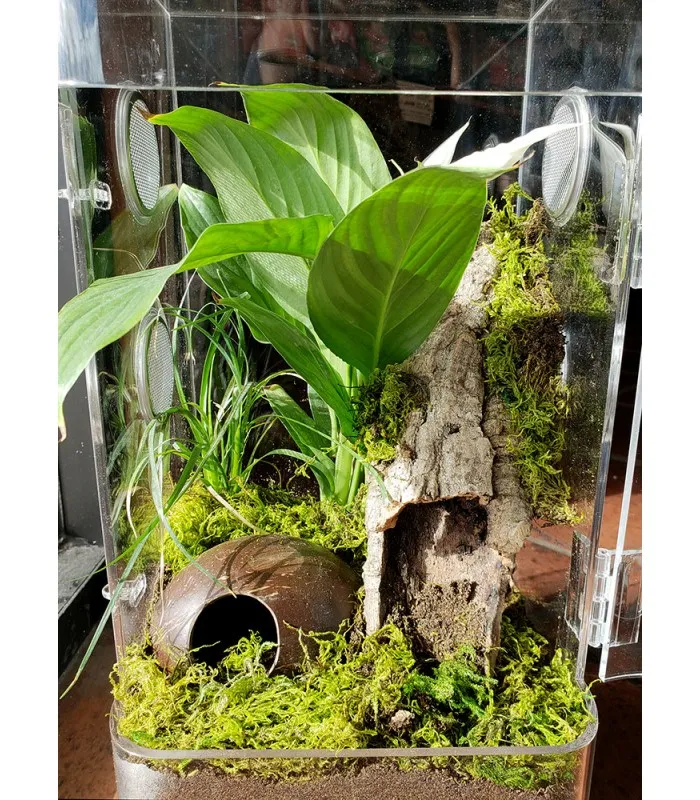
What is a Front Opening Tarantula Enclosure
A front opening tarantula enclosure is a specialized habitat designed to house tarantulas, featuring a door or access panel located on the front of the enclosure. This design contrasts with top-opening enclosures, offering unique advantages for both the tarantula and the keeper. These enclosures are crafted from various materials, such as acrylic or glass, and are built with features that promote a safe and enriching environment for the tarantula. Front opening enclosures are increasingly popular among tarantula enthusiasts because they provide improved accessibility for maintenance and observation, while also minimizing the risk of escapes. The design allows for easier feeding, watering, and cleaning, contributing to the overall well-being of the spider. Moreover, the front access design reduces the chances of startling the tarantula, making interactions less stressful for both the animal and the keeper.
Benefits of Using Front Opening Enclosures
Front opening tarantula enclosures offer several key advantages over other enclosure types. These benefits enhance the experience for both the tarantula and the keeper. The primary benefit is the ease of access they provide. This design simplifies daily tasks like feeding and watering, as well as more infrequent maintenance such as cleaning and substrate replacement. Another significant advantage is improved visibility, allowing for better observation of the tarantula’s behavior and health. The front-opening design reduces the likelihood of the tarantula perceiving the keeper as a threat, minimizing stress. Furthermore, the design significantly reduces the risk of the tarantula escaping. All of these factors contribute to a more user-friendly and safer environment for the tarantula, making it a popular choice for both novice and experienced keepers.
Easy Access for Feeding and Maintenance

One of the standout benefits of a front opening enclosure is the ease with which keepers can access the inside. Feeding the tarantula becomes a much simpler task, with less risk of the spider scurrying out of reach or becoming startled. Watering the tarantula, whether by providing a water dish or misting the enclosure, is also more convenient. Maintenance chores, such as removing uneaten food, cleaning up waste, and spot-cleaning the enclosure, are also simplified. This ease of access encourages more frequent and thorough cleaning, which can positively impact the overall health and hygiene of the tarantula’s environment. This design feature makes the overall experience of keeping a tarantula more manageable and enjoyable.
Improved Viewing and Observation
The front opening design of the enclosure often offers superior viewing angles, allowing keepers to observe their tarantulas more effectively. This improved visibility is particularly beneficial for monitoring the tarantula’s behavior, health, and overall well-being. Keepers can readily observe their tarantula’s feeding habits, molting process, and general activity levels. This allows for the early detection of potential health issues or changes in behavior that may require attention. The ability to observe the tarantula without disrupting its habitat is also a great advantage. With less disturbance, the tarantula is more likely to exhibit natural behaviors, which helps in understanding the spider’s needs and preferences.
Reduced Risk of Escape
Front opening enclosures are often designed with features that minimize the risk of tarantula escapes. The front door usually has a secure locking mechanism, preventing accidental openings. This is particularly important because tarantulas are surprisingly fast and agile, and a quick escape can be hard to prevent. Well-designed enclosures incorporate features like tight-fitting doors and secure latches. In addition, the overall design of the enclosure can reduce the chances of the tarantula finding an escape route. The front-opening design allows for a more deliberate approach to accessing the enclosure, which further decreases the risk of an escape. This offers a significant advantage, especially for new keepers who are learning to handle and care for their tarantulas.
How to Choose the Right Front Opening Enclosure

Selecting the right front opening enclosure is crucial for the health and well-being of your tarantula. Several factors should be carefully considered when making your selection. The size and dimensions of the enclosure are essential; it must be large enough for the tarantula to move around comfortably while also providing enough space for substrate, decorations, and hiding places. The materials used in the enclosure, such as acrylic or glass, will affect its durability and clarity. Ventilation is another key aspect, ensuring that the enclosure has proper airflow to prevent the buildup of harmful gases and maintain a suitable humidity level. By taking these elements into account, keepers can ensure they provide their tarantulas with a safe, enriching, and comfortable habitat.
Size and Dimensions Considerations
The size and dimensions of the enclosure must be appropriate for the specific tarantula species and its current size. A juvenile tarantula will need a smaller enclosure than an adult. A general guideline is to provide a space that is at least two to three times the tarantula’s leg span in width. Height is important for arboreal species (those that live in trees) since they need room to climb and potentially molt. For terrestrial species (those that live on the ground), the height isn’t as critical, but should still be sufficient to accommodate the substrate and any decorative features. The dimensions of the enclosure influence the tarantula’s ability to move around, hunt, and establish a comfortable living space. Choose the enclosure size based on the needs of the tarantula you intend to house. A cramped enclosure can lead to stress and potentially health problems, while an enclosure that is too large can make it harder for the tarantula to find food and feel secure.
Material and Durability
The material of the enclosure directly impacts its durability, visibility, and overall suitability. Acrylic enclosures are popular due to their clarity, making it easy to observe the tarantula. Acrylic is also lighter than glass and can be more resistant to shattering, making it a safer option. However, acrylic can be more prone to scratching. Glass enclosures offer excellent clarity and are very durable, but they can be heavier and more prone to breakage if not handled carefully. Regardless of the material, it is important to choose an enclosure that is sturdy and can withstand regular handling and cleaning. Ensure that the enclosure’s door and any other openings are securely fastened to prevent escape and ensure the safety of both the tarantula and the keeper. The materials selected will contribute to the longevity and functionality of the enclosure.
Ventilation and Airflow

Proper ventilation is crucial for maintaining the tarantula’s health and the overall environment within the enclosure. Adequate airflow prevents the buildup of harmful gases, such as ammonia, which can be produced by the tarantula’s waste and the breakdown of organic matter in the enclosure. Good ventilation also helps regulate humidity levels. Enclosures should have ventilation openings, such as mesh tops or strategically placed vents, to ensure a steady flow of fresh air. The ventilation should allow for air circulation without creating drafts or excessive drying of the enclosure. A balance between ventilation and humidity is essential. The enclosure needs enough ventilation to prevent mold and bacterial growth, but it should also retain enough moisture to meet the tarantula’s specific humidity requirements. The location and size of ventilation openings will play a key role in managing the enclosure’s environment.
Setting up Your Front Opening Tarantula Enclosure
Setting up a front opening tarantula enclosure involves several steps, from selecting the right substrate to arranging the decorations. This process is critical for creating a habitat that meets the tarantula’s needs and promotes its well-being. The foundation of the enclosure is the substrate, which provides a suitable surface for the tarantula to burrow, hide, and move around on. Decorations, such as branches, rocks, and artificial plants, add visual interest and provide places for the tarantula to hide and feel secure. Humidity and temperature levels need to be monitored and managed to replicate the tarantula’s natural habitat. Proper set-up will transform the enclosure into a comfortable and stimulating home.
Substrate Selection
The choice of substrate is a key element in creating a healthy and comfortable environment for your tarantula. The substrate should be able to hold humidity, allow for burrowing (for terrestrial species), and be non-toxic. Common substrate options include coconut fiber (eco earth), peat moss, and a mix of topsoil and sand. Coconut fiber is a widely popular choice because it holds moisture well, resists mold growth, and is readily available. Peat moss is also a good option. When using topsoil and sand, it’s important to ensure that the soil is free of fertilizers or other chemicals. The substrate depth depends on the tarantula’s species and whether it is terrestrial or arboreal. Terrestrial species often require a deeper layer of substrate to burrow in, while arboreal species typically need less. Regular monitoring of the substrate’s condition (moisture content and cleanliness) is crucial.
Decorations and Hiding Places

Providing appropriate decorations and hiding places is essential for a tarantula’s well-being. Tarantulas are naturally secretive and like to retreat to secure locations. Suitable decorations include cork bark, artificial plants, and rocks. These items offer places for the tarantula to hide, feel secure, and to possibly use as a base for their web. The placement of decorations should be considerate of the tarantula’s species. Terrestrial species benefit from ground-level hides, while arboreal species need elevated structures like branches or vertical pieces of cork bark. Avoid using decorations with sharp edges or any materials that can harm the tarantula. It is also important to ensure that the decorations do not take up too much space, allowing enough room for the tarantula to move around. By adding a range of decorations and hiding spots, you can create a visually enriching and secure environment for your tarantula.
Maintaining the Enclosure
Proper maintenance of the front opening tarantula enclosure is essential for the tarantula’s health and longevity. This includes feeding and watering your tarantula, cleaning the enclosure, and monitoring environmental conditions. Regular cleaning removes waste and uneaten food. The enclosure’s environment, including humidity and temperature, has to be managed. Consistent maintenance ensures the enclosure remains a safe and healthy habitat for the tarantula.
Feeding and Watering
Feeding a tarantula involves providing appropriately sized insects or other prey items. The frequency of feeding depends on the tarantula’s age, species, and growth rate. Young tarantulas typically need to be fed more often than adults. Uneaten food should be removed within 24 hours to prevent the build-up of mold and bacteria. Water should be provided in a shallow dish, readily accessible to the tarantula. The water dish should be cleaned and refilled regularly. Some keepers also mist the enclosure to increase humidity. Always ensure that the water is fresh and clean. The front-opening design of the enclosure makes both feeding and watering convenient, reducing the potential for disturbance and stress for the tarantula.
Cleaning and Waste Removal

Regular cleaning of the enclosure is necessary to maintain a hygienic environment. Spot cleaning should be done frequently, removing any uneaten food, feces, and other waste products. Every few months, a more thorough cleaning is required, involving removing the substrate and cleaning the enclosure’s surfaces. When cleaning the enclosure, it is essential to remove the tarantula safely, placing it in a temporary holding container. Disinfectants should be used with caution, ensuring that they are safe for tarantulas and do not leave any harmful residues. The frequency of cleaning depends on the size of the enclosure, the species of the tarantula, and the rate at which waste accumulates. A clean enclosure provides a healthier and more comfortable environment for the tarantula.
Troubleshooting Common Problems
Even with diligent care, keepers may encounter some common issues. Understanding and addressing these problems promptly can help ensure the health and well-being of your tarantula. Problems range from mold growth and refusal to eat to issues related to molting. Knowledge and preventative care are key.
Mold and Fungus Prevention
Mold and fungus can develop in tarantula enclosures, especially when humidity levels are high and ventilation is poor. Prevention involves maintaining appropriate humidity levels, ensuring adequate ventilation, and removing uneaten food and waste promptly. Regular substrate changes can also help prevent mold growth. If mold is present, it should be addressed immediately. Remove the affected substrate and clean the enclosure thoroughly. In severe cases, you might need to replace the entire substrate and all the decorations. Preventative measures are far more effective than addressing an established mold infestation. Maintaining a clean and well-ventilated environment will help to minimize the risk of mold and fungus.
Dealing with a Refusal to Eat

Tarantulas may refuse to eat for various reasons, including the stress of molting, changes in their environment, or illness. If your tarantula refuses food, first check its enclosure and its environment. Ensure that humidity, temperature, and ventilation are all appropriate for the species. If the tarantula is close to molting, it is not unusual for it to lose its appetite. Offering food less frequently can also help. If the refusal to eat persists for an extended period, consult with an experienced tarantula keeper or a veterinarian experienced with exotic pets. Avoid offering food items that are too large or too difficult to capture. Refusal to eat is sometimes a sign of an underlying health issue. Monitoring your tarantula’s behavior and environment is very important.
Conclusion
Front opening tarantula enclosures provide numerous benefits, making them an excellent choice for both novice and experienced keepers. Their ease of access, improved viewing, and reduced risk of escape contribute to a more enjoyable and safer experience. Selecting the appropriate enclosure involves careful consideration of size, materials, and ventilation to create the best possible environment. Proper setup, maintenance, and troubleshooting will ensure the health and happiness of your tarantula. With the right knowledge and care, a front opening enclosure can be the perfect home for your fascinating and unique pet, offering a great way to enjoy the world of tarantulas.