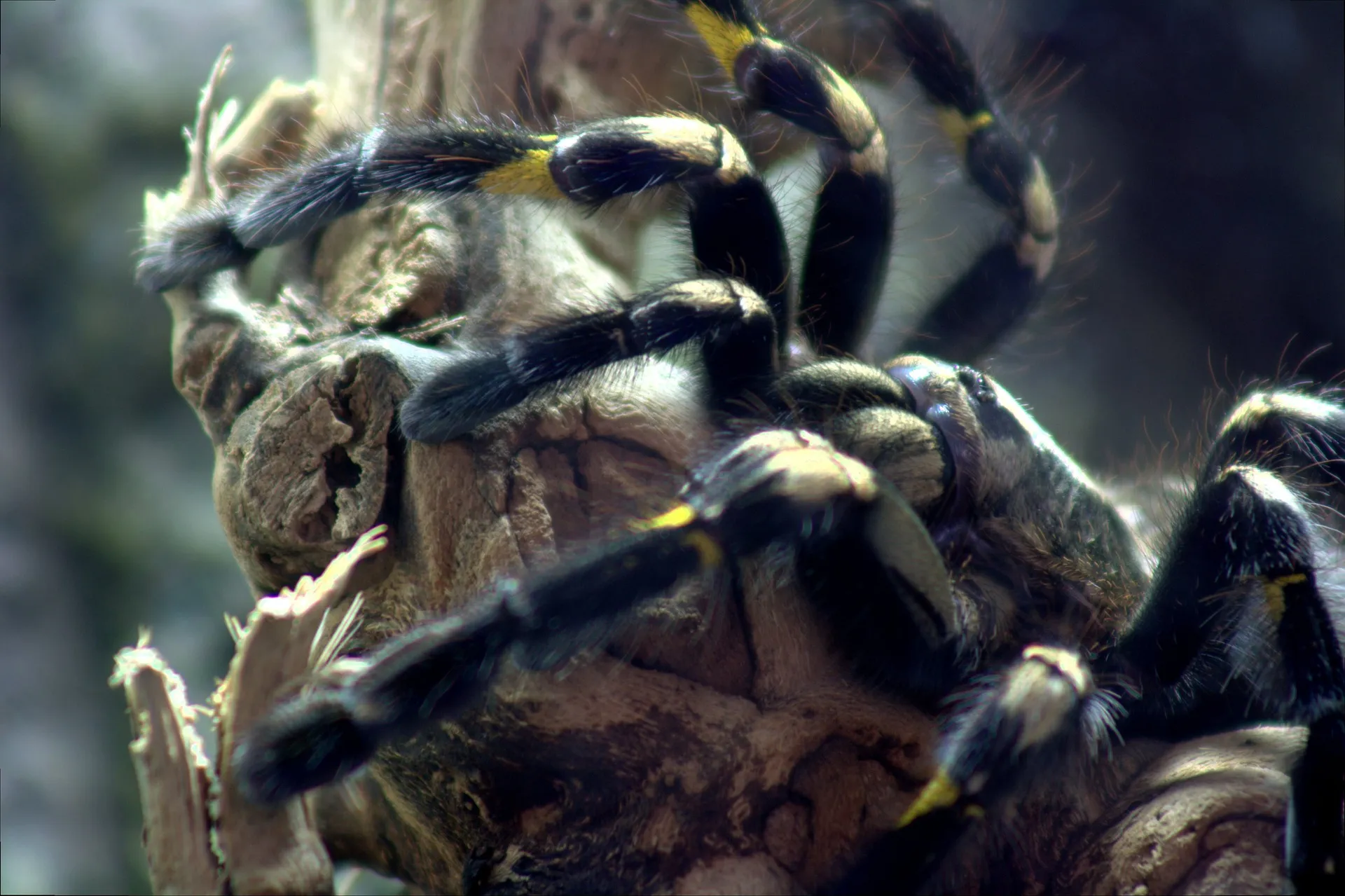
Gooty Sapphire Tarantula Habitat Essentials
Creating the perfect habitat for a Gooty Sapphire Tarantula (Poecilotheria metallica) is crucial for its health and well-being. These stunning arboreal tarantulas, known for their vibrant blue and yellow coloration, require specific environmental conditions to thrive in captivity. Understanding the essential elements of their habitat, from enclosure size and substrate to temperature, humidity, and decor, is the key to successfully keeping and enjoying these fascinating creatures. A well-designed habitat not only provides a comfortable living space but also allows you to observe their natural behaviors and appreciate their beauty. This guide will break down the top five essential facts, ensuring you can provide the best possible care for your Gooty Sapphire Tarantula.
Size and Space Requirements
One of the most important aspects of a Gooty Sapphire Tarantula’s habitat is the size of the enclosure. These tarantulas are fast-growing and active, so providing adequate space is essential for their movement and overall health. A cramped enclosure can lead to stress, reduced activity, and difficulties during molting. The enclosure should also be properly ventilated to maintain a healthy environment. The size of the enclosure will largely depend on the size of the tarantula, so consider how much it might grow over time.
Enclosure Dimensions

For a juvenile Gooty Sapphire Tarantula, a small, appropriately sized enclosure is needed, such as a terrarium with dimensions of approximately 8x8x12 inches (length x width x height). As the tarantula grows, the enclosure size must increase. A full-grown adult will need a terrarium that’s at least 12x12x18 inches, but larger is always preferable. The height is especially important since these are arboreal tarantulas and prefer to climb. Ensure the enclosure has a secure lid to prevent escapes, as these tarantulas are very fast. Consider enclosures made of glass or clear acrylic for better viewing.
Ventilation Importance
Proper ventilation is critical to prevent the build-up of stale air, mold, and excessive humidity, which can be detrimental to the tarantula’s health. The enclosure should have cross-ventilation, which means air can flow in from one side and out from another. This can be achieved through ventilation holes in the top, sides, or a combination of both. Avoid enclosures with poor ventilation, as this can lead to respiratory issues and other health problems for your Gooty Sapphire Tarantula. Make sure the ventilation is secure so the tarantula cannot escape.
Substrate Selection
The substrate is the bedding material at the bottom of the enclosure. It serves multiple purposes, including providing a comfortable surface for the tarantula, helping to regulate humidity, and acting as a natural medium for waste disposal. The right choice of substrate is crucial for the well-being of your Gooty Sapphire Tarantula. The substrate should be able to absorb moisture, allow for burrowing (although these tarantulas rarely burrow), and be free from harmful chemicals or contaminants.
Ideal Substrate Types

A good substrate for a Gooty Sapphire Tarantula should retain moisture while still allowing for adequate ventilation. Suitable options include a mix of coco fiber, peat moss, and a small amount of vermiculite. Coco fiber is an excellent choice, as it absorbs moisture well and is readily available. Peat moss also helps in retaining moisture and adding to the natural look of the enclosure. Avoid substrates like sand, which can be abrasive and difficult to maintain. The best substrate mixes provide a balance between moisture retention and drainage.
Substrate Depth Considerations
The depth of the substrate depends on the size of the tarantula and its preference for burrowing, though Gooty Sapphires are primarily arboreal and don’t burrow. For juveniles, 2-3 inches of substrate is usually sufficient. For larger specimens, you can increase the depth to 3-4 inches. This allows for some burrowing behavior and helps to maintain the proper humidity levels. Replace the substrate regularly, usually every 6-12 months, or sooner if it becomes soiled or moldy. Always spot-clean the substrate as needed to remove any waste or uneaten food.
Temperature and Humidity
Maintaining the correct temperature and humidity levels is paramount for the health and longevity of your Gooty Sapphire Tarantula. These conditions mimic its natural habitat and support essential biological processes such as molting and feeding. Fluctuations in temperature or humidity can stress the tarantula, potentially leading to health issues. Regular monitoring and adjustments are essential to ensure the environment is always optimal.
Optimal Temperature Range

Gooty Sapphire Tarantulas thrive in a temperature range of 75-85°F (24-29°C). It’s important to maintain a consistent temperature, avoiding extreme fluctuations. You can use a digital thermometer to monitor the temperature inside the enclosure. If the temperature is too low, use a heat mat or a low-wattage heat lamp on one side of the enclosure to create a thermal gradient, allowing the tarantula to regulate its body temperature. Always ensure the heat source is properly regulated and doesn’t overheat the enclosure.
Humidity Levels and Management
Humidity is another critical factor in creating a healthy environment for your Gooty Sapphire Tarantula. They require a humidity level of 65-75%. You can measure the humidity using a hygrometer. To maintain the correct humidity levels, mist the enclosure lightly with dechlorinated water every few days. The frequency of misting will depend on the ventilation and the ambient humidity in your home. Ensure that the substrate is moist but not soaking wet, as excessive moisture can lead to mold growth. Proper ventilation also helps regulate humidity by preventing it from becoming too high.
Water and Hydration
Providing a clean and accessible water source is essential for the hydration of your Gooty Sapphire Tarantula. Fresh water ensures the tarantula stays healthy and can properly molt. Monitoring and maintaining the water source is a regular part of tarantula care.
Water Dish Requirements

Use a shallow water dish that is readily accessible to the tarantula. The dish should be stable to prevent spills and should be the correct size for the size of your tarantula. For juveniles, a bottle cap or a small, shallow dish is adequate. For adults, use a larger, more stable dish. Ensure the water dish is cleaned and refilled regularly, ideally every other day, or as needed to prevent the growth of bacteria or algae. Always use dechlorinated water, as chlorine can be harmful to tarantulas. Distilled water or bottled spring water are good alternatives.
Misting and Hydration Frequency
In addition to the water dish, lightly misting the enclosure can help to maintain humidity and provide the tarantula with another way to hydrate. Mist the enclosure lightly with dechlorinated water every few days, or as needed to maintain the correct humidity levels. Do not over-mist the enclosure, as this can lead to excessive humidity and mold growth. Observe your tarantula and its behavior to gauge if you are providing adequate hydration. If it seems dehydrated, increase the frequency of misting or provide additional water sources.
Decor and Enrichment
Providing appropriate decor and enrichment within the Gooty Sapphire Tarantula’s habitat is crucial for its psychological well-being. While tarantulas may not require elaborate furnishings, the right elements will provide security, promote natural behaviors, and enhance the overall aesthetic of the enclosure. Choose decor that is safe, functional, and easy to maintain.
Hiding Places and Furnishings

Gooty Sapphire Tarantulas are arboreal and prefer to have places to hide. Provide several hiding spots in the enclosure. Cork bark, branches, and artificial plants are excellent choices. Arrange the decor to create a sense of security and privacy, allowing the tarantula to retreat when it feels threatened or wants to molt. The hiding spots should be secure and not easily topple. Ensure the decor provides ample climbing space, allowing the tarantula to explore its environment and exhibit its natural behaviors. Avoid sharp objects that could injure the tarantula.
Live vs. Artificial Plants
Both live and artificial plants can be used to decorate the Gooty Sapphire Tarantula’s enclosure. Live plants add a natural aesthetic and can help maintain humidity. However, they require extra care, including appropriate lighting and watering. Choose plants that are non-toxic and safe for tarantulas, such as Pothos or small ferns. Artificial plants offer a low-maintenance alternative, providing visual appeal and hiding places without the need for special care. Clean artificial plants regularly to prevent the build-up of dust and debris. Regardless of the choice, make sure the plants are securely placed and do not pose a risk to the tarantula.
Feeding and Maintenance
Proper feeding and maintenance are vital for the long-term health and well-being of your Gooty Sapphire Tarantula. Regular cleaning, appropriate feeding, and consistent monitoring of the environment are essential aspects of tarantula care.
Cleaning and Waste Removal

Regular cleaning is necessary to maintain a healthy and hygienic environment. Spot-clean the enclosure regularly, removing any uneaten food, dead insects, and fecal matter. Replace the substrate every 6-12 months, or sooner if needed, to prevent the build-up of waste and bacteria. Clean the water dish regularly, and replace the water with fresh, dechlorinated water. The frequency of cleaning will depend on the size of the enclosure and the amount of waste produced. A clean enclosure helps prevent disease and ensures your tarantula thrives.
Feeding Frequency
The feeding frequency of your Gooty Sapphire Tarantula depends on its age and size. Spiderlings should be fed every other day, while juveniles and adults can be fed 1-2 times per week. Provide a variety of appropriately sized insects, such as crickets, roaches, and mealworms. Remove any uneaten food within 24 hours to prevent the build-up of waste and potential pests. Adjust the feeding frequency based on the tarantula’s appetite and body condition. A well-fed tarantula will have a plump abdomen. Avoid overfeeding, as this can be detrimental to its health.
In conclusion, creating a perfect Gooty Sapphire Tarantula habitat involves understanding their unique needs and providing an environment that meets those needs. Following these guidelines on enclosure size, substrate, temperature, humidity, decor, and feeding will ensure that your tarantula has a comfortable and stimulating habitat. Proper care not only enhances their well-being but also offers you the opportunity to appreciate the remarkable beauty and fascinating behavior of these amazing arachnids.