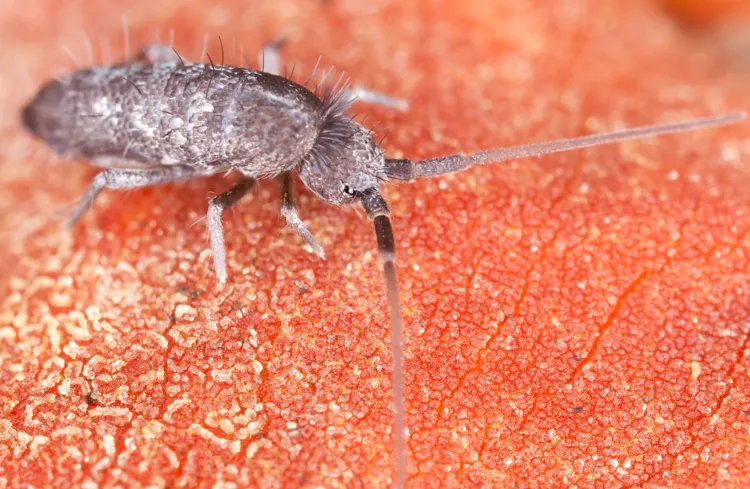
What Are Springtails?
Springtails, tiny arthropods belonging to the class Collembola, are often overlooked but play a crucial role in various ecosystems. These small creatures, typically measuring just a few millimeters, are detritivores, meaning they feed on decaying organic matter. They thrive in moist environments, such as leaf litter, soil, and under decaying wood. They are known for their ability to jump, thanks to a specialized furcula, a forked appendage tucked beneath their abdomen, which they use to propel themselves away from predators. Springtails come in many different colors and can be found all over the world, contributing to nutrient cycling and decomposition processes in the natural world.
Why Springtails Are Great for Tarantulas
Springtails are an excellent food source for tarantulas, especially spiderlings and smaller species. Their small size makes them easy for tarantulas to catch and consume, while their soft bodies provide a digestible meal. They are also rich in essential nutrients, which can contribute to the overall health and growth of your tarantula. Springtails are a much better option for feeding than other bugs at this size, such as fruit flies. Furthermore, springtails are relatively easy to culture, making them a sustainable and convenient option for feeding your tarantula. Finally, springtails are known to help keep the tarantula enclosure clean by consuming mold and decaying organic matter, reducing the risk of unwanted pests or diseases. These tiny creatures provide both nutritional value and hygiene benefits.
Nutritional Value of Springtails

Springtails offer a surprisingly nutritious diet for tarantulas, providing essential elements for healthy development. They are a good source of protein, crucial for the growth and maintenance of tarantulas. The protein content is essential for the formation of tissues, enzymes, and hormones. Furthermore, springtails contain beneficial chitin, which is a type of fiber that aids in digestion. They also contain small amounts of essential vitamins and minerals. The exact nutritional profile can vary slightly depending on the species and diet of the springtails themselves. Many keepers will also feed the springtails fish flakes which have additional nutrients and vitamins to support the tarantula’s diet.
Springtail Life Cycle
Understanding the springtail life cycle is key to successful culturing and providing a consistent food source. The life cycle of a springtail is relatively simple, typically involving several molting stages from nymph to adult. They start as eggs, often laid in moist environments, and hatch into small, immature forms that resemble miniature adults. These nymphs go through a series of molts, growing larger each time. The number of molts varies depending on the species and environmental conditions. The entire process, from egg to adult, can take several weeks to months. Springtails are prolific breeders in the right conditions, which makes them very easy to culture. The key is to provide a humid environment, a food source, and a stable temperature.
How to Culture Springtails
Culturing springtails is a relatively straightforward process. The first step is to set up a suitable container. Clear plastic containers with ventilated lids work well, allowing you to monitor your colony. The culture medium typically consists of a substrate that retains moisture, such as charcoal, sphagnum moss, or a mixture of peat moss and vermiculite. Maintaining the right moisture level is essential – the substrate should be damp but not waterlogged. You’ll need a food source for the springtails. Options include yeast flakes, fish food, or a mixture of the two. The temperature should be kept at a consistent level, around 68-72 degrees Fahrenheit. Regular monitoring of the colony is essential, including checking the moisture levels, adding food as needed, and removing any mold growth. With proper care, your colony should flourish, providing a consistent supply of springtails for your tarantula.
Benefits of Using Springtails

There are many benefits to using springtails as part of your tarantula’s diet. They are an excellent food source for small tarantulas and spiderlings because of their small size, making them easy to catch and consume. Springtails contribute to the overall well-being of your tarantula by providing a varied and balanced diet. They are also relatively inexpensive and readily available, especially if you culture your own. Using springtails reduces the reliance on larger, less convenient feeder insects. They can also help maintain the cleanliness of your tarantula’s enclosure by consuming mold and decaying matter. They help to reduce the risk of unwanted pests. Overall, springtails offer a cost-effective, nutritious, and beneficial food source for tarantulas.
Where to Buy Springtails
Springtails can be purchased from several sources. Online reptile supply stores offer established springtail cultures, often shipped in containers ready to use. Local pet stores that specialize in reptiles or amphibians may also carry springtails, although the selection can be less consistent. You can also find springtail cultures through online marketplaces and specialized forums. Before purchasing, check reviews and ensure the seller has a good reputation for providing healthy cultures. Buying locally can sometimes be advantageous, as it reduces shipping time and the risk of the culture being damaged during transport. Consider buying starter cultures and culturing them yourself, which can be a cost-effective way to ensure a continuous supply. Make sure to quarantine the springtails before introducing them to your tarantula’s enclosure, especially if you are buying them from a new source.
Maintaining a Springtail Colony
Maintaining a thriving springtail colony involves several key practices. Regular moisture management is vital – the substrate should be kept damp but not saturated. Overwatering can lead to mold growth. Feeding the springtails regularly with a suitable food source, such as fish flakes or yeast, is essential for the colony to thrive. Monitor the colony for any signs of mold or unwanted pests, and remove any affected areas promptly. Ventilation is essential, so the container should have adequate airflow to prevent stagnant conditions and maintain the right moisture level. Periodically replenish the substrate to provide fresh organic matter for the springtails to feed on. If your colony begins to grow, you may need to expand your culture by transferring some of the substrate to a new container. Regular maintenance ensures a steady supply of springtails for your tarantulas.
Best Springtail Species for Tarantulas

Several springtail species are suitable for feeding to tarantulas, but the species most frequently cultured and used is the Folsomia candida. This is the most common species used for tarantula feeding, due to their relatively small size and ease of care. Folsomia candida thrive in a wide range of conditions and are relatively easy to culture. Other species exist, but are less common and more difficult to obtain. The size of the springtail is essential, especially when choosing a species for young tarantulas and spiderlings. Always make sure the springtail species you select is safe, non-toxic, and free from any parasites or diseases that could harm your tarantula. Before introducing a new species to your tarantula’s diet, research it and observe your tarantula’s reactions.
How to Feed Springtails to Your Tarantula
Feeding springtails to your tarantula is a straightforward process. For small tarantulas and spiderlings, simply introduce a small amount of springtails directly into the enclosure. They will scavenge the enclosure. For larger tarantulas, you can also do this, but you may need to offer them a greater quantity. Overfeeding is rarely a concern with springtails, as any uneaten springtails will eventually die off or be consumed by the tarantula. You can also use a small, shallow dish with a bit of substrate to hold the springtails, making it easier for the tarantula to find and consume them. Remove any uneaten springtails and any excess substrate to maintain cleanliness and prevent mold growth. Monitor your tarantula’s feeding habits and adjust the amount of springtails accordingly. Make sure you are not overfeeding, which can lead to a refusal to eat later.
Potential Problems and Solutions
While culturing and using springtails is generally easy, there are a few potential problems to be aware of. Mold growth can be a common issue if the substrate is too wet. To solve this, reduce the moisture levels and increase the ventilation. Mite infestations are another potential problem, and these can compete with the springtails for resources. If you detect mites, quarantine the culture and consider starting a new one. The occasional introduction of predatory mites might help in controlling them. A lack of springtails can be caused by insufficient food. This issue can be fixed by providing a suitable food source or overcrowding in the colony. Regularly check your springtail cultures for issues. If you are attentive, you will have a constant source of healthy food for your tarantula. Also, remember to research the species for the tarantula you are feeding so you do not inadvertently hurt it with the wrong type of springtail.