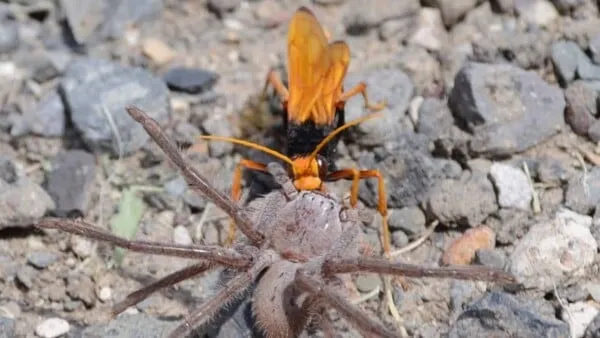
What is a Tarantula Hawk?
The tarantula hawk, a member of the Pompilidae family, is a remarkable and formidable insect, best known for its impressive size and its hunting prowess. These wasps are among the largest wasps on Earth, with some species reaching up to two inches in length. Their striking appearance, often featuring a deep blue-black body and vibrant orange wings, makes them easily recognizable. But it’s not just their looks that are captivating; their behavior, particularly their hunting habits, sets them apart in the insect world. The tarantula hawk’s life is intricately linked with that of tarantula spiders, making them a fascinating subject of study for entomologists and nature enthusiasts alike.
Appearance and Characteristics
Tarantula hawks are easily identified by their large size and distinctive coloration. Most species have a black or blue-black body and bright orange wings, although some may have different wing colors. They possess strong legs and mandibles, essential for their predatory lifestyle. The females are larger than the males and have a prominent stinger, which they use to paralyze their prey. Their robust build and specialized features are adaptations for their role as predators of large spiders. The size of tarantula hawks makes them intimidating, but their specific features showcase their suitability for their ecological niche.
Habitat and Distribution

Tarantula hawks are found in various regions around the world, with a particular presence in the southwestern United States and parts of South America. They thrive in warm, arid environments where tarantula spiders are prevalent. The wasps construct nests in the ground or in existing cavities, often near areas where they can find their prey. Their distribution is directly tied to the availability of tarantulas, as the wasps depend on these spiders to continue their life cycle. These insects play a significant role in their ecosystems, helping to regulate spider populations, which in turn, impacts the ecosystem balance.
The Spider’s World
Before delving into the tarantula hawk’s hunting strategy, it’s crucial to understand the world of its primary prey: the tarantula spider. These large, hairy spiders are found in diverse habitats, including burrows, under rocks, and in vegetation. They are opportunistic predators, feeding on insects and other small animals. Their behavior and defensive mechanisms play a critical role in their survival, and the tarantula hawk has evolved to overcome these defenses. The spider’s life cycle, from egg to adult, is slow, making it vulnerable to predators like the tarantula hawk.
Common Spider Species
Several species of tarantula spiders are preyed upon by tarantula hawks. These spiders are typically large, with a lifespan that can extend for many years. Their size and robust nature make them a formidable opponent for most predators, but not for the tarantula hawk. Tarantulas can be found in various ecosystems, each spider species having unique characteristics. Understanding the spider’s habitat, size, and temperament provides insights into the challenges the tarantula hawk faces during the hunt.
Spider Behavior and Defenses

Tarantula spiders have several defenses to protect themselves. These include their fangs, venom, and urticating hairs, which they can flick at potential threats. They are also capable of aggressive behaviors when threatened, such as rearing up and showing their fangs. The spider’s survival depends on its ability to avoid predators, but the tarantula hawk has developed strategies to overcome these defenses. The way tarantula spiders act under threat or during hunts is very important. These behaviors are critical for understanding the dynamics of the predator-prey relationship between tarantula hawks and spiders.
Tarantula Hawk’s Hunting Strategy
The tarantula hawk’s hunting strategy is a complex and fascinating process. The female wasp actively seeks out tarantula spiders, using its keen senses to locate them. Once a spider is found, the wasp must overcome the spider’s defenses to secure its prey. The hunt requires precision, agility, and a strategic approach, making the tarantula hawk one of nature’s most skilled hunters. Its specialized behavior and adaptations contribute to its success.
Locating the Spider
The tarantula hawk employs a variety of methods to find its prey. They can locate spiders by sight and smell, often scouring the ground and vegetation for potential targets. The wasps are adept at identifying the spider’s burrow or hiding place, which is crucial for a successful hunt. This process can involve prolonged searching, and the wasp must be patient and persistent. Locating the spider is the first step of the tarantula hawk’s intricate hunting strategy, demonstrating its reliance on highly developed senses.
The Sting and Paralysis

Once a spider is located, the tarantula hawk must neutralize it to proceed. The female wasp will aggressively attack the spider, often engaging in a brief but intense struggle. The wasp will use its stinger to inject venom, paralyzing the spider. This sting is notoriously painful, and while not lethal, it immobilizes the spider, allowing the wasp to continue its process. The tarantula hawk’s sting is a critical part of its hunting strategy. This paralysis is essential for the wasp to complete its reproductive cycle.
Egg Laying and Spider’s Fate
After paralyzing the spider, the tarantula hawk will drag it back to a burrow or create a nest. The wasp then lays a single egg on the spider’s abdomen. Once the egg hatches, the larva feeds on the paralyzed spider. This provides a living larder for the developing wasp larva, which will eventually consume the spider completely before pupating. The fate of the spider is sealed from the moment it is stung. The wasp’s process ensures its offspring have a secure and nutritious environment to develop, thus perpetuating the cycle.
What if You Encounter a Tarantula Hawk?
Encounters with tarantula hawks are rare, but understanding how to react if you happen to meet one is essential. These wasps are generally not aggressive towards humans unless provoked, but their sting is famously painful. It’s important to observe these creatures from a distance. Proper safety precautions can minimize the risk of being stung.
Precautions and Safety

If you encounter a tarantula hawk, the best approach is to stay calm and keep a safe distance. Avoid sudden movements or attempts to swat at the wasp. Observe the insect from afar, and allow it to go about its business. Wear protective clothing, such as long sleeves and pants, if you are in an area where tarantula hawks are known to be present. Educating yourself on the insect’s behavior will reduce your risk of being stung, letting you appreciate the marvel of these creatures from a safe distance.
First Aid
In the event of a tarantula hawk sting, the pain is immediate and intense. Seek medical attention if necessary. Common symptoms include severe pain, swelling, and redness at the sting site. The pain usually subsides within a few hours, but the effects can last longer. Simple first aid involves removing the stinger if it is present, applying ice packs to reduce swelling, and taking over-the-counter pain relievers. In the event of an allergic reaction, it is important to seek medical help immediately. Being prepared for a sting is important to ensure your safety.
The Cycle Continues
The relationship between the tarantula hawk and the spider is a testament to the complexities of nature. The tarantula hawk’s life cycle depends on the tarantula spider, showcasing an intimate predator-prey relationship. Understanding this cycle and the behaviors of both species will increase our appreciation for the natural world. The tarantula hawk’s ongoing existence continues, along with the spiders it hunts, keeping the cycle running.