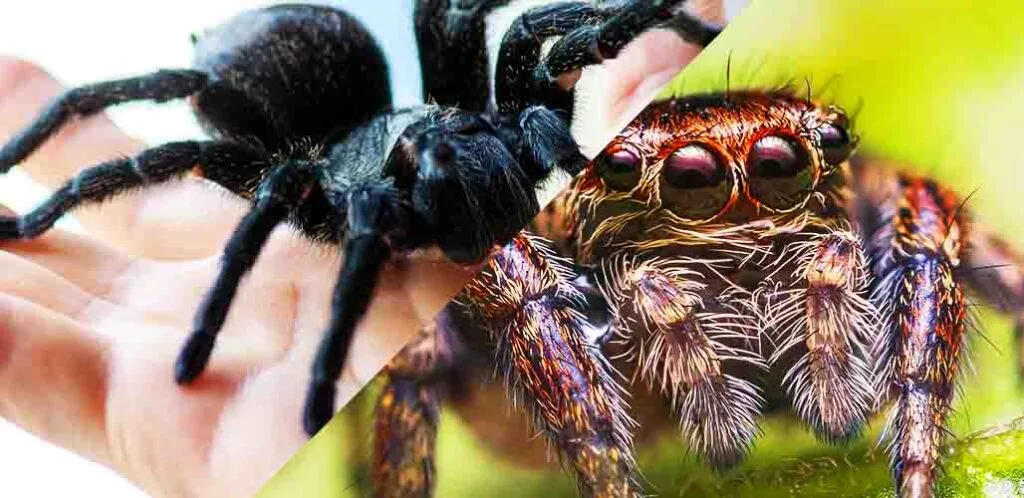
What are Spiders and Tarantulas
Spiders and tarantulas both belong to the class Arachnida, meaning they are arachnids, but they are not the same. The term ‘spider’ is a broad term encompassing all species within the order Araneae. Tarantulas, on the other hand, are a specific family within this order, Theraphosidae. This is like saying that a poodle is a dog; a tarantula is a type of spider. Both share common characteristics such as eight legs, two body segments (cephalothorax and abdomen), and the ability to produce silk. However, significant differences exist between them, making it easy to distinguish one from the other with some knowledge.
Tarantula vs Spider Appearance Differences
One of the most immediate ways to tell a tarantula from a spider is by their physical appearance. While both have eight legs and similar body structures, the proportions and features vary considerably. Observing these differences can instantly help you identify whether you’re looking at a tarantula or another type of spider. These differences are not only aesthetic but also reflect different evolutionary adaptations.
Size and Body Structure

Generally, tarantulas are much larger and more robust than most other spiders. They have thick legs and a hairy body, giving them a formidable appearance. Their bodies are often wider, and their legs are longer relative to their body size. Spiders, in contrast, tend to have smaller bodies and legs that are thinner. The proportions are typically more streamlined for quicker movement and web-building.
Hair and Coloration
The presence and type of hair are another key difference. Tarantulas are covered in dense hairs, which they use for sensory purposes and defense. These hairs can also be urticating, meaning they can cause irritation if they come into contact with skin. Spiders may have hairs, but they are generally less dense and not as prominent as those of tarantulas. The coloration of tarantulas often includes vibrant patterns, while spiders’ colors are usually more subdued, providing better camouflage.
Tarantula vs Spider Habitat Differences
The environments where tarantulas and spiders are found also offer clues to their identities. The preferred habitats and geographic distribution provide insights into their evolutionary adaptations and survival strategies. These differences affect how they hunt, build shelters, and interact with their surroundings.
Geographic Distribution

Tarantulas are primarily found in warmer climates, including tropical and subtropical regions. They thrive in environments such as grasslands, deserts, and rainforests. Spiders, on the other hand, have a more global distribution. They can be found in almost every habitat on Earth, from the Arctic to the Antarctic, showcasing their adaptability to various conditions. Their wider distribution is partly due to their diverse survival strategies.
Environmental Preferences
Tarantulas are often ground-dwelling or live in burrows, providing shelter from predators and harsh weather. They prefer humid environments and often come out at night to hunt. Many spiders build webs in various locations, including trees, bushes, and even inside human dwellings. Some spiders are also ground dwellers, but their habitats are often less specific than tarantulas. They adapt to various microclimates based on the type of web they build.
Tarantula vs Spider Behavior
The behavior of tarantulas and spiders also highlights some of their key differences. These behavioral patterns are linked to their physical adaptations and habitats. Observing their hunting techniques and defense mechanisms can provide valuable insight into their survival strategies.
Hunting and Diet

Tarantulas are ambush predators, using their size and venom to capture prey. They typically hunt at night, ambushing insects, small animals, and even other tarantulas. Spiders use a variety of hunting methods, including building webs to trap insects or actively pursuing their prey. Some spiders also use venom to subdue their prey, but their methods are often more diverse due to the variety of spider species.
Venom and Defense Mechanisms
Tarantulas have a venomous bite, but it is generally not lethal to humans. They primarily use their fangs to inject venom into their prey. They also have urticating hairs, which can be released when threatened to deter predators. Spiders also use venom, but the potency varies greatly depending on the species. Their defense mechanisms also include camouflage, speed, and the ability to drop from their webs to avoid danger.
Tarantula vs Spider Lifespan
The lifespan of tarantulas and spiders differs considerably, with tarantulas generally living much longer than most spider species. This longevity is a significant factor in their life history and evolutionary adaptations.
Lifespan Differences

Tarantulas can live for many years, with some females living for over 20 years in captivity. Males generally have shorter lifespans, often dying shortly after maturity. Spiders, in contrast, have shorter lifespans, usually living for one to two years. Some species may live longer, but this is the exception rather than the rule. The difference in longevity reflects their different reproductive strategies and survival challenges.
Factors Affecting Lifespan
Several factors influence the lifespan of tarantulas and spiders, including diet, habitat, and the presence of predators. Adequate nutrition, a safe environment, and avoidance of predators are crucial for both types of arachnids. In captivity, tarantulas can live longer because they are protected from many environmental dangers and have a consistent food supply. Spiders in the wild face greater challenges due to their vulnerability to predators and the elements.
Are Tarantulas and Spiders Same or Different
In summary, while tarantulas are spiders, they are distinct from other spider families due to their size, appearance, habitat preferences, behavior, and lifespan. Recognizing these differences helps to appreciate the diversity within the arachnid world and understand how these creatures have adapted to thrive in various environments. Whether you are curious about the differences, this article helps you understand that a tarantula is a type of spider, but they are not the same.